

Let’s be real: whenever economy experts start talking about markets, inflation, or interest rates, many of us tune out or roll our eyes. It’s easy to think their jargon-filled explanations are just guesswork or fancy guesses designed to sound smart. But here’s the thing—these folks actually know what they’re talking about. Behind all the complex graphs and confusing terminology lies years of training, data crunching, and real-world experience that help them make sense of the financial chaos. So, before you dismiss the next economic forecast as just guesswork, let’s dive into why these experts really do deserve a little more credit.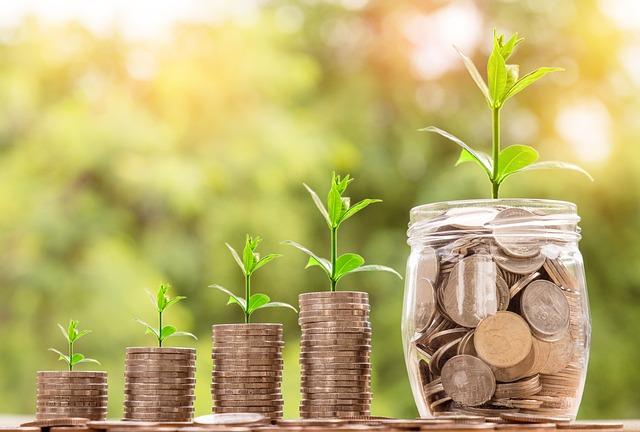
Understanding Their Training and real-World Experience
Economists don’t just pull numbers out of thin air; their insights come from years of rigorous education complemented by real-world challenges. Most of these experts have spent countless hours mastering complex theories, crunching data, and understanding market behaviors in academic settings. But what truly sets them apart is their practical exposure — they’ve worked with governments, financial institutions, and multinational corporations to navigate real crises and opportunities.
here’s a speedy peek at the kind of experience that backs their bold statements:
- Policy advisory roles: Helping design strategies that affect millions.
- Financial market consulting: Providing actionable intelligence to traders and investors.
- Academic research: Conducting peer-reviewed studies that shape global economic thought.
- International agency projects: working with the IMF,World Bank,and similar organizations.
| Type of Experience | Typical Duration | Impact Area |
|---|---|---|
| Government Advisory | 3-7 years | National Economy |
| Market Analysis | 5+ years | Investment Decisions |
| Academic Research | Ongoing | Theory & Policy Making |
| International Projects | 2-6 years | Global Advancement |
How data and Trends Guide Their Predictions
Behind every confident forecast from an economy expert lies a sea of data points and the pulse of evolving trends. These professionals dive into past records, analyze current market behaviour, and monitor global shifts that impact supply chains, consumer confidence, and investment patterns. They don’t just look at numbers; they interpret the story those numbers tell. This means factoring in political developments, technological advancements, and even social sentiments—because money doesn’t move in a vacuum.
To make sense of the complexity, experts typically focus on several key indicators:
- Gross Domestic Product (GDP) growth rates
- Unemployment and wage trends
- Inflation metrics such as the Consumer Price Index (CPI)
- Consumer spending habits and savings rates
- Interest rate movements and central bank policies
| Indicator | Why It matters |
|---|---|
| GDP Growth | Measures economic health and expansion speed |
| Unemployment Rate | Reflects job market strength and consumer capacity |
| Inflation Rate | Signals purchasing power and cost of living changes |
| Interest rates | Affects borrowing costs and investment inflows |

The Role of Critical Thinking in Economic Analysis
When economists dive into data, they’re not just crunching numbers blindly—they’re dissecting data with a sharp, analytical mind. Critical thinking allows them to spot anomalies, question assumptions, and identify patterns that others might miss. It’s what helps them differentiate between correlation and causation,a crucial skill in avoiding misleading conclusions. By scrutinizing the reliability of their sources and considering alternative explanations, these experts ensure their interpretations are as accurate and unbiased as possible. This mental rigor is what separates informed opinions from mere speculation.
Here’s a quick snapshot of how critical thinking plays out in economic analysis:
- Evaluating Evidence: sifting through conflicting data sets to find the most credible information.
- Questioning Assumptions: Challenging conventional wisdom rather than accepting it at face value.
- integrating Context: Understanding how cultural, political, and social factors influence economic outcomes.
- Recognizing Bias: Detecting personal or systemic biases that could skew results.
| Critical Thinking Skill | Economic Benefit |
|---|---|
| Data Interpretation | More accurate forecasting |
| Assumption Testing | Reduced risk of errors |
| Bias Awareness | Stronger policy recommendations |
| Holistic View | Better decision-making |
Why experts embrace Uncertainty and Adapt Quickly
When it comes to economic forecasts, few things are set in stone. Experts understand that the financial landscape is a living, breathing entity—constantly shifting due to global events, policy changes, and unexpected market behaviors. Instead of seeing uncertainty as a weakness, they embrace it as a feature of their field.Reacting swiftly and adapting to new information isn’t just a skill; it’s a necessity. This mindset allows them to revise assumptions, reset expectations, and fine-tune their models in real time, keeping their advice relevant and practical.
What truly sets them apart is a toolbox full of flexible strategies. For instance:
- Scenario planning: Preparing multiple potential outcomes rather than banking on a single prediction.
- Data triangulation: Pulling insights from diverse, sometimes conflicting sources to find common ground.
- Continuous learning: Staying curious and informed about everything from geopolitical shifts to tech breakthroughs.
| Expert Approach | Benefit |
|---|---|
| Adapting models with real-time data | Ensures decisions fit current realities |
| Acknowledging the limits of forecasts | Builds more resilient strategies |
| Balancing quantitative and qualitative data | Adds depth to analysis beyond numbers |
Tips for tapping Into Expert Insights Without Getting Overwhelmed
When diving into expert analysis, it’s easy to feel swamped by jargon and endless data streams. Rather of trying to absorb everything at once, focus on key takeaways that relate directly to your interests or current economic concerns. Keep a mindset open to learning rather than memorizing. Break down complex ideas into bite-sized pieces — a quick summary or infographic can work wonders. Remember, experts communicate for a reason: they want their insights to be accessible, not a secret code. Let their core message guide your understanding before drilling down into the nitty-gritty.
To keep things manageable, try these practical tips:
- Follow reliable sources renowned for clear explanations and actionable advice.
- Use curated newsletters or podcasts that synthesize expert opinions into digestible formats.
- Don’t hesitate to ask questions — forums and social media often host approachable expert discussions.
- Set time limits on research sessions to avoid burnout and information overload.
Harnessing these habits will help you tap into expert knowledge confidently, without feeling like you’re drowning in data.
Q&A
Q&A: Why Economy Experts Actually Know What They’re Talking About
Q: So, why should I even trust economy experts? Aren’t they just guessing half the time?
A: It’s a common misconception that economists are just wild guessers. The truth is, they rely on tons of data, years of study, and tried-and-true models to make sense of complex financial systems. Sure, they don’t have a crystal ball, but their predictions and advice are grounded in solid research and tested theories—not random hunches.
Q: But the economy is so unpredictable! How can anyone truly understand it?
A: The economy is definitely a beast with many moving parts,but experts use sophisticated tools like statistical analysis,historical trends,and behavioral insights to piece together the puzzle. Think of it like weather forecasting: it’s not perfect, but it’s way better than guessing.Economists improve their models constantly as new info comes in.
Q: Aren’t economists just biased or influenced by politics?
A: Like any field, there are always some biases, but real economy experts prioritize data and impartial analysis. Most strive to be objective and separate their personal views from their professional work. Plus, the academic community constantly reviews and critiques economic research to keep things honest.
Q: Can a single expert really understand such a huge, global system?
A: Good question! No one can know everything, but top economists specialize in different areas—like international trade, labor markets, or monetary policy—which means they bring deep knowledge of their niche. When combined,their insights create a clearer picture of the overall economy.
Q: How do economy experts actually help regular people?
A: Their work influences policies that stabilize markets, control inflation, and create jobs. They advise governments, businesses, and even help guide your personal financial decisions (like understanding interest rates or inflation). So yeah,their insights trickle down to everyday life more than you might realize.
Q: Can I learn to think like an economy expert?
A: Absolutely! While it takes study, you can start by getting comfortable with basic economic concepts, following trusted news sources, and keeping an eye on data trends. Understanding the ‘why’ behind economic headlines will help you separate real insights from noise.
bottom line? Economy experts aren’t perfect, but they bring serious knowledge, rigorous methods, and tons of experience to the table—definitely worth paying attention to.
Concluding Remarks
So there you have it — while economists might sometimes seem like they’re speaking another language, their insights are backed by solid data, tried-and-true methods, and a deep understanding of how our complex world ticks. Sure, predictions aren’t perfect (hello, unexpected curveballs), but their expertise helps us make sense of the chaos and plan smarter for the future. Next time you hear an economy expert dropping charts and jargon, remember: they actually know what they’re talking about — and that’s pretty reassuring in an unpredictable world. Cheers to the brainiacs keeping an eye on the numbers!